Get analysis, insight & opinions from the world's top marketers.
Sign up to our newsletter.
To celebrate 10 years of WFA Global Marketer of the Year, we asked this year’s jurors what has changed over the last decade and the skills today’s marketing leaders need
A lot can change in 10 years; just ask a CMO. They’ve had to cope with transformation upon transformation as digital media has upended common practice. At the same time, the very best have continued to embed the marketing fundamentals across their teams.
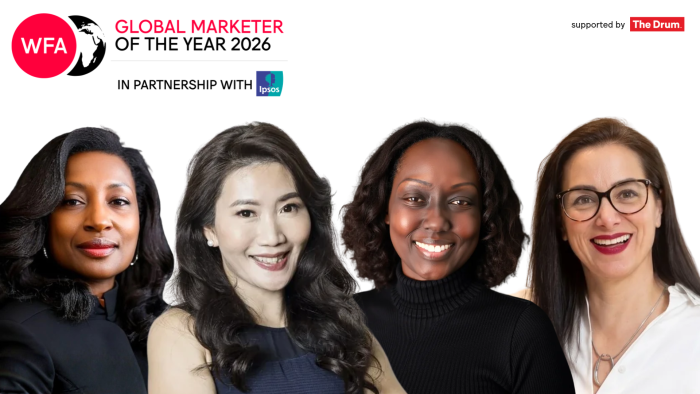
Five of this year’s jurors put pen to paper to consider what they saw as the biggest changes in marketing leadership over the past decade.
Their answers covered the growing breadth of the role, transformation and digital, how people and AI work together, and the push for marketing to prove itself as a growth engine for the business. Running through all of them is the need to manage complexity.
Juliana Chu, VP of Digital & Ecommerce, Asia Pacific at Shiseido, said the role has grown from leading a function, making sure the ABCs of traditional marketing (advertising, brand building and campaigns) are well run, to delivering revenue growth for brands.
“The role of marketing leader has evolved to an enterprise change leader that aligns marketing, technology, commercial teams and organisational transformation – the scope involves thought leadership on rethinking how humans, AI agents, data science, CRM technology and automation can work together to build brand love through delivering hyper-personalised, omnichannel customer experience in an agile and predictive manner, whilst ensuring long-term investments are balanced with short-term financial gains too.”
Breadth was also the biggest change for Fiona Kigen, Head of Group Marketing and Corporate Affairs Academy at Absa. “You need to be as comfortable talking about growth, revenue, customer economics and return on investment as you are talking about brand, creativity and customer experience. Data, technology and now AI have accelerated that shift because we have more ability, and therefore more responsibility, to demonstrate impact.”
Stephan Loerke, WFA CEO, agrees. “The biggest change is the sheer breadth of what we now ask of marketing leaders. Today’s CMO is expected to be ‘octopus-shaped’: a multi-specialist who is a hard-nosed business leader fluent in finance and technology, and at the same time an empathetic, creative star who inspires teams and connects with consumers.”
Expanding the role has also required today’s CMO to take on one of business’s toughest tasks, transformation, adding capabilities and new ways of working. “Marketers have become important transformation leaders, building new capabilities, partnerships and ways of working across organisations. For me, that is the defining shift of the decade: marketing leadership is no longer only about making brands matter to people. It is about making marketing matter to the business,” says Viviana Ochoa, Vice President Marketing Excellence at Essity.
The need for transformation has been driven by the increasing complexity of today’s marketing and business landscape, particularly the rise of digital.
“From where I sit in sourcing, the move to digital has made buying media much more complex. Platforms, creators and retail media all work differently, so leaders need to understand what they’re paying for, the rights they retain and how they’ll know it’s working,” says Krista Hill, Head of Strategic Sourcing, Global Marketing at Uber.
That added complexity often arrives alongside pressure to cut costs, and Hill warns against going too far. “There’s a point where savings start to weaken the talent, creativity and partnerships that allow marketing to reach its full potential. The best leaders bring marketing, finance and sourcing together to make those calls. They find smarter ways to work and have the confidence to push back when short-term savings put future growth at risk.”
Underpinning a decade of change is the message that marketing has to perform for the business. As well as being the voice of the consumer within the corporate space, marketing leaders are also expected to contribute to the bottom line.
“Over the last decade, digital, data and now AI have dramatically expanded what marketers can do. But they have also made our world more fragmented and complex. Great leadership today is therefore less about having all the answers and more about connecting the right things: consumer insight with creativity, technology with human judgement, global scale with local relevance, and brand building with commercial growth,” adds Essity’s Ochoa.
Absa’s Kigen agrees: “Ten years ago, it was perhaps easier for marketing effectiveness to be discussed predominantly through the lens of campaigns, brand health and engagement. Today, the question is increasingly: what did marketing contribute to the actual growth of the business? That changes the profile of the marketing leader.”
WFA's Loerke reaches the same conclusion as Ochoa, and believes it calls for a different kind of leader. With no one able to know or do everything, he sees the CMO’s role becoming that of a team builder.
“The truth is that no single person can be all of these things. So the defining shift is from ‘marketer as heroic individual to marketer as ‘organisational architect’. The best leaders now design global teams around the most critical needs of the business, building capabilities that complement their own leadership style and skills. Great marketing leadership today is less about having every answer, and more about building the team that does,” he explains.