Get analysis, insight & opinions from the world's top marketers.
Sign up to our newsletter.
We asked the Global Marketer of the Year 2025 jury which qualities will be most important for marketing leaders in the months and years to come.
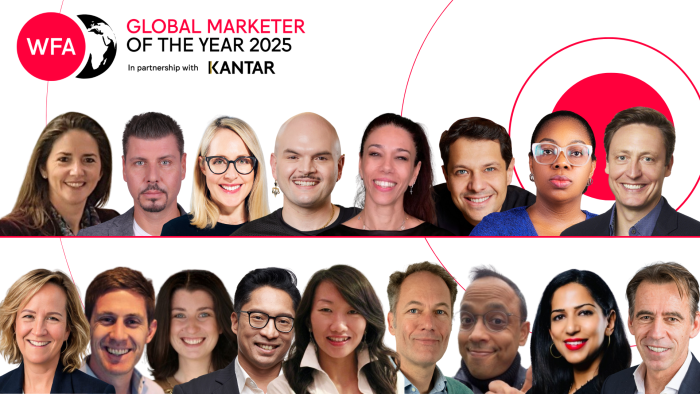
While every marketing leader faces different challenges, it’s possible to group the skills that our jury of leaders believe will matter in the years to come.
Surprisingly, there’s little mention of technology with consumer understanding, marketing fundamentals and critical thinking among the skills deemed vital in a world that’s moving fast.
One of those advocating consumer understanding is Florian Péquignot, Human Resources Vice-President Global Brand Building at P&G. “I still believe that the most important skills today are the same fundamentals that have defined marketing for many years. At P&G these would be captured within our Brand Building Framework centred around the WHO (the consumer we are targeting, jobs to be done, problems to solve, habits to form, all based on insights); the WHAT (the brand equity of what we want to stand for in the hearts and minds of consumers); and the HOW (how the consumers will experience our brand, engage and interact with our brand).”
Kenneth Lim, Assistant Chief Executive, Marketing Group at Singapore Tourism Board, echoes this point. “Amidst the rapid changes faced by the marketing industry in part due to the increasingly complex space we operate in, marketing leaders should never lose sight of putting consumers at the heart of every decision. Understanding why consumers behave in a certain way, and leveraging creativity to engage them emotionally, must continue to be the hallmark of good marketers, even in today’s digital-first world.”
Consumers, of course, sit at the heart of marketing fundamentals so there is huge crossover with our next group of judges advocating an adherence to classical goals in a fast-paced world.
“Being able to combine resilience with responsiveness. Volatile environments, challenged brands and business, ever evolving technologies and capabilities can be threats or they can be opportunities if marketers are able to truly harness them, staying true to the core foundations of marketing but yet continually disrupting themselves in a healthy way to drive growth ahead of others,” says Joel Renkema, Global Head of Insights at Inter IKEA Group.
WFA CEO Stephan Loerke agrees: “The majority of WFA’s CMOs confirm these are exceptional times, that it does not feel like business as usual. So, agility and the ability to adapt to geopolitical and economic pressures as well as technological developments matter more than ever. Yet the fundamentals of marketing have not changed, only the context in which we operate. The most effective global marketing leaders do not lose sight of this and are able to balance a global perspective with local understanding. Above all, empathy, adaptability and a relentless focus on value will define success.”
For Mark Visser, Global Head of Consulting at Kantar, staying true to marketing fundamentals requires a more longer-term focus. “The best marketing leaders will be those who master the fundamentals while staying ruthlessly focused on long-term brand building. In a world obsessed with shiny new toys, the real quality that matters is strategic discipline. Ignore the hype, trust the evidence, and remember: brands grow by being meaningfully different and consistently salient,” he says.
It goes without saying that navigating the fast-moving world of today requires a focused approach, driven by critical thinking, flexibility as well as curiosity. All these qualities were cited by our jurors.
“Marketing leaders must cut through information overload, think critically and translate complexity into clarity for their teams. With change accelerating, setting clear priorities and acting decisively is essential,” says Eleni Kitra, Executive Director, Advertising Business Group (ABG) Middle East.
“The industry is unrecognizable in so many respects. I think what is going to be important is creative problem solving, flexibility speed and patience. There is no one way to solve a problem or create an opportunity. It will require a different approach depending on what we are solving for. People will need to get comfortable with no set ways of working or thinking. I personally embrace the changes,” says Jane Labuschagne, Vice-President, Head of Our LEGO Agency Boston at The LEGO™ Group.
That view is also echoed by Alyssa Fenoglio, former Vice-President, Global Head of Digital Commercial at Teva Pharmaceuticals. “The pace of change demands leaders who stay curious and act with agility. They must champion the human – building trust with customers and society, while fostering creativity and responsible experimentation internally. And as technology reshapes every touchpoint, leaders must bring clarity in complexity, serving as translators across functions and cultures,” she says.
Finally, we come to the issue that’s probably dominating lots of CMO to-do lists, technology. For Alexey Bokov, Vice-President, Brand, Product, Content and Experience at Visa, he says modern skills will be key. “We will see a demand for technology-savvy and agile leaders and great collaborators with product, commercial (which is relevant for today too) but also with IT and tech. As AI develops, companies may start thinking about bringing their habitual products and services in the AI space,” he says.
The nominations for this year’s Global Marketer of the Year are being reviewed by the jury, with the finalists to be announced in November. For more information about the award, visit globalmarketeroftheyear.org.