Get analysis, insight & opinions from the world's top marketers.
Sign up to our newsletter.
What does it take to create a brand that really connects with consumers? Chrystal Yeong, Senior Manager, Marketing Services at WFA, reports.
In a world where attention is fleeting and choices are endless, what makes a brand truly matter? Many of the brands we use and interact with every day feel ever-present in our lives – yet a few of us pause to consider the work that it takes to build and sustain that connection.
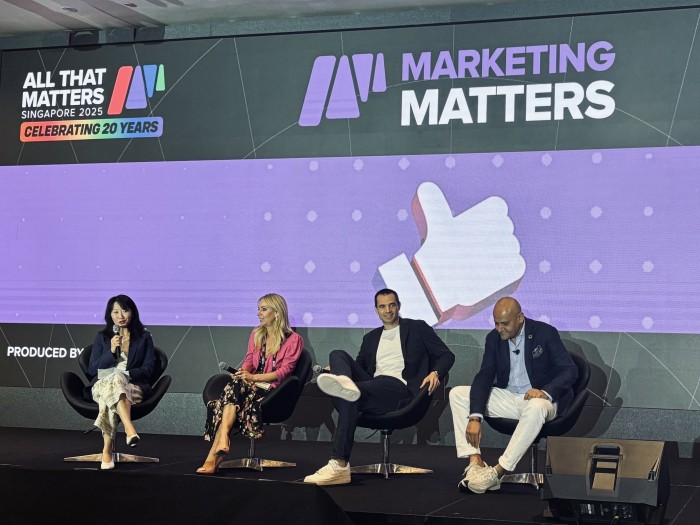
At this year's All That Matters conference, WFA’s Asia Advisory Board hosted a panel exploring the evolving role of the CMO – and why the brands that endure are those that go beyond campaigns to shape businesses, communities and the culture of tomorrow.
We used to talk a lot about CMOs being storytellers but today, that remit feels too narrow. The best marketing leaders have evolved to become enterprise connectors – “architects of value” who bridge internal teams and external stakeholders, connecting product, culture, strategy and consumers to create impact across and beyond the organisation.
Jerome Bigio, SVP Marketing, APAC at Warner Bros. Discovery, described his role as being as much a business leader as a marketing leader: “My role is to consistently deliver on our promise of entertainment and to have clarity on what that means. I try to be the voice of the consumer, make the hard choices on their behalf, and ultimately drive maximum value – while also helping the organisation to monetise this. I believe that if you can grow consumer value, you can grow the business.”
Julie Nestor, EVP, Head of Marketing and Communications, APAC at Mastercard, reinforced the importance of being the connective tissue across the organisation: “We are always championing the cause of the people who ultimately use our products and we look to drive impact back into the communities where we operate. Much of our role as CMOs is about translating consumer interests, behaviours and insights into business terms that resonate with internal stakeholders – helping leaders, including our CFOs, see how marketing investments translate into real value for the business.”
As Jerome puts it, “Ultimately, a brand belongs to everybody,” and value doesn’t stop with consumers and shareholders. Building on that, Rupen Desai, CMO and Venture Partner of Una Terra, noted that “marketers understand the external world better than any other part of the organisation – and with that comes the responsibility (and ability) to translate insight into multiple springboards of value generation: value for consumer, business, societal and the planet.”
His provocation was clear: if your brand disappeared tomorrow, would the world really miss it? “Let’s aim to move away from building brands that are extractive, to ones that really matter,” he argued.
Julie pointed to inclusion as innovation, rather than tokenism, with Mastercard embedding accessibility and equity into tangible products – from pioneering Touch Cards for the blind and vision impaired, to True Name cards that empower transgender and non-binary individuals to display their chosen name.
Kok Hwee Ng, Chief Marketing Officer at Zespri, echoed that brands can turn purpose into practice by ensuring their business models create shared prosperity and long-term resilience. “At Zespri, we ask ourselves – are we bringing prosperity back to our growers, who are traditionally some of the more marginalised in the value chain? Are we delivering on a product that is relevant and nutritious to our consumers, and making their lives better and easier?”
At the same time, CMOs are grappling with the transformative forces reshaping the industry. AI, data and inclusion all offer immense opportunity, but also carry risks – all compounded by the constant pressure to deliver short-term performance and demonstrate marketing’s impact.
Julie underscored Mastercard’s conviction to pursue inclusion even as it becomes politically charged – reaffirming that inclusion remains central to both its purpose and long-term business sustainability. “If it continues to be the right thing to do, and it links to our vision and mission as a company, then we should absolutely do it,” she said.
Rupen cautioned that as marketers accelerate investment in AI-driven media and technology, they must also take responsibility for how those systems shape information and culture, as well as their impact on the planet. “If we don’t govern AI, we will all be jointly accountable for the death of the truth that the world receives.”
Jerome noted that while consumers today face an abundance of content, research shows they have less time and attention to navigate it. “A lot of the work we do is to try to use data to solve that for them,” he explained, helping consumers discover what matters most through hyper-personalised experiences that simplify choice. However, it was stressed that personalisation must balance convenience with trust and the integrity of information.
In the end, the mandate for CMOs circles back to courage. Courage to resist short-termism. Courage to champion the voice of the consumer while speaking the language of the CEO and CFO. Courage to navigate AI and data with responsibility and integrity while harnessing them to create value. Courage to connect business growth with societal good and earn a meaningful place in people’s lives.
As Zespri’s Kok Hwee reflected, the CMO today is an architect of value – not only for the business, but for society at large, “the best CMOs build brands with great intention. In a time of rapid change and rising complexity, the brands that matter most will be those who lead with clarity, conviction and bravery.”
NIVEA's Global VP, Tobias Collée, shares on the importance of humanity and cultural respect, as part of the Candid CMO series.