
Get analysis, insight & opinions from the world's top marketers.
Sign up to our newsletter.
International marketing and working in a local market are very different says the CMO of Suntory Beverage & Food Europe (SBFE).
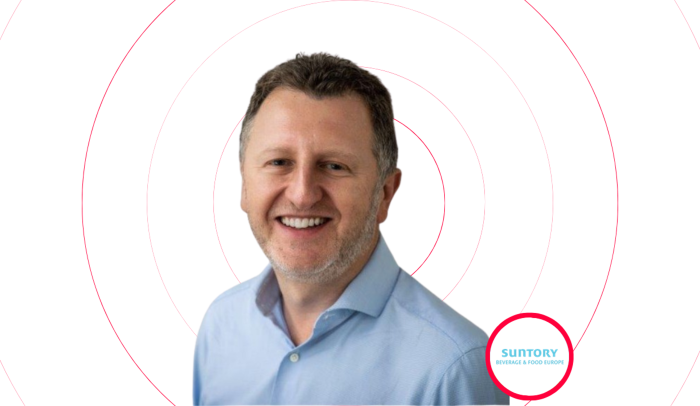
Marketers often fail to understand the differences between working in a single market and working in regional or global roles says François Bazini.
The Suntory Beverage & Food Europe CMO, who oversees brands such as Schweppes*, La Casera, Orangina, Oasis, Ribena, and Lucozade, says the roles require very different skills.
“In the local role you use your instinct, you are close to your customers, you are close to the execution, you can rely much more on informal relationships” he says. “When you work internationally, on a region or on a large number of markets, the way you add value is completely different. You add value by aligning people, by enabling scalable projects, multiplying your impact by sharing learnings, by asking the right questions and challenging consensus.”
The difference is so huge, he says that he now runs workshops for his teams at SBFE “because I think the move from local to international is probably one of the hardest for any marketer and one by the way, where I have seen a lot of local marketers, even talented ones, fail, because they assume the same way to add value applies to international marketing,” he says.
Compared to many marketing departments, Bazini also encourages his teams to look wider, considering the full suite of share driving tools via their analytical “Market Contact Audits” research.
“With this approach, when we make marketing choices of different touch points, we make them agnostically,” he says. “The debate I'm trying to organise within my team is not should we spend more on Instagram or on TV - which are only different types of media - but completely agnostically: where should the money be spent – the real choices are between different types of spending, like, in store activation, sampling events, visibility in bars, and media” he says.
François, who has been within the Suntory family since 2014, came into marketing after being inspired during his MBA at Northeastern University in Boston. During an advertising programme the professor showed some advertising for Harley-Davidson, launched after a period of quality challenges, featuring some very scary looking Hell’s Angels.
“It was just reading: Would you sell an unreliable bike to these guys?, which for me captures so much. This is so smart. You see the ad and you're immediately convinced that of course, they must have impeccable quality… and only marketing can do that, can tap so deeply into human insights,” he says.
After five years working for Danone in Canada, François joined Boston Consulting Group, where he “learned to be more fact based, more analytical, more thorough”.
“When you stay in marketing for years and years, you develop great skills in terms of storytelling, but your analytical muscle tends to be underdeveloped,” he says. “When you do consulting, you work very deep and also very wide, and you then see marketing in the context of all the functions. You know, you don't just see marketing in isolation, but you see all the trade-offs that a company has to make.”
A key part of his post-BCG career has been brand turnarounds, applying rigour to achieve success with Tropicana, Ribena and Lipton Ice Tea among others.
Back in 2008-2010 while working on the brand Lipton Ice Tea, he dealt with a corporate decision to compete in the healthy premium drinks category, ignoring the fact that the consumer base was lower income families simply looking for tasty and fun drinks. The rescue involved reinstating the taste profile but also the fun. “It was hard to convince [joint venture owners] Unilever and PepsiCo to go back to a slightly sweeter version and rebuild the values of taste fun, which at the time was not really what the corporate world wanted to hear. But our responsibility as marketers is to truly listen to consumers first and foremost” he says.
A less successful moment was during the launch of Pepsi Next in 2012. Designed to offer a mid-calorie cola for people who wanted to cut down sugar but didn’t like the taste of zero calorie options, it never really flew.
After the launch, sales gradually slipped away. “It's easier with hindsight but the cola category needed more profound reinvention. If you take the new generation of products, for example, they are good for the gut or they have functional benefits and then they happen to have less calories. But ‘fewer calories’ is not front and centre,” he says. “On paper it made sense, but the consumer truth wasn't there.”
Reflecting on his career, the advice that he’d give to his younger self would include reading more research from people like Byron Sharp – “there is a lot of mistakes that can be avoided by studying a bit of marketing science” – but he’d also encourage every young marketer to behave as brand CEO.
“Broaden your scope, think about the whole enterprise, think about those trade-offs between cost and price, between volumes and profits. Don't delegate them to the CFO. Manage your brand as if you were the CEO of that brand,” he says, adding that this is the approach taken by Suntory Beverage & Food Europe.
That also means putting the P&L of a brand at the heart of your plans. “Not in the appendix of the marketing documents. You need to understand what your brand is trying to solve financially. What its role is within the portfolio of the company. That's super important,” he says.
One word of warning he also offers is being careful not to do great marketing for the wrong category. “We sell in a lot of common outlets as spirits companies and our teams get inspired by what champagne companies, spirits companies, beer companies do. And sometimes they cut and paste,” he says. “The economics are not the same. The reasons why a consumer buys Schweppes* are different from the ones why they buy a Dom Pérignon. You can do great marketing, superb events with premium visibility in those bars, but then you have an ROI that is a nightmare.”
One of the major trends that marketers hate to talk about is the ageing population. But says François it’s a huge opportunity particularly for SBFE’s brand Schweppes*.
“Every company needs to have a strategy to address the needs of people 50-plus. Just the expression 50-plus shows how much of a blind spot it is for marketers, they represent close to half of the population!” he says.
He blames a variety of factors, from the fact that agencies are mostly staffed with under 35s to myths about older consumers. Those myths include that older people don’t buy as many brands as younger people and that they don’t switch. Then there’s the fact that many marketers are obsessed with recruiting younger people, the future consumers, when “the one group of consumers in Europe that is shrinking are younger people”.
Schweppes*, he notes, already prove how rewarding this space can be. Its positioning around sophistication and elevated taste connects naturally with older consumers whose preferences have evolved toward more complex and balanced flavours.
“Each time I read the word rejuvenate in a strategy my alarm bells start ringing. I'm not saying it's necessarily bad, but it opens the door to potentially a lot of strategic mistakes and misconceptions based on a naive view of the demographics”.
*Owned and commercialised within Suntory Beverage & Food Europe respective territories. All references to the brand Schweppes in this article should be interpreted accordingly.
WFA is celebrating the world’s best marketers and exploring the journeys they are on to deliver better marketing. This series helps distil some of the biggest learnings of our CMO members. As we are great believers in the power to learn from successes as well as missteps, we hope this will give our readers the opportunity to learn more about the things they are most proud of, but also about where they may have done things differently. More at https://wfanet.org/CandidCMO
If you'd like to nominate someone with an interesting story to be interviewed for the Candid CMO series, get in touch with comms@wfanet.org.