Get analysis, insight & opinions from the world's top marketers.
Sign up to our newsletter.
Marketers can build more impactful stories if they tell proper stories, particularly those that lean into the illogical and unexpected. Adam Sheridan, Global Head of Products, Creative Excellence (and the author of Misfits) at Ipsos explains.
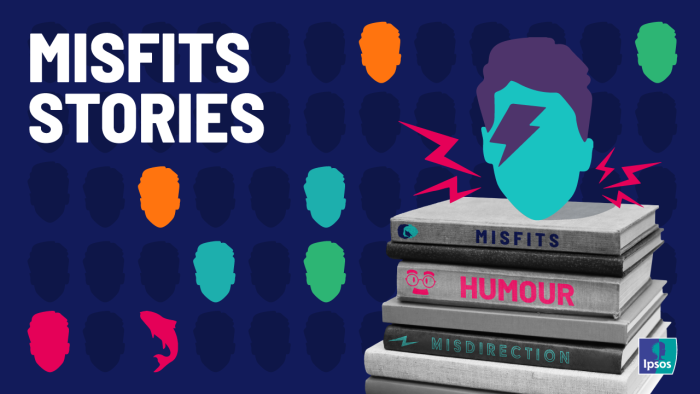
Storytelling is a deeply human way of making sense of the world, and its power to change behaviour extends far beyond advertising. From clinical interventions to the value we assign everyday objects, stories consistently outperform bare facts.
Within that context, Ipsos set out to quantify storytelling’s role in creative effectiveness.
Taking a sample of 15,000 ads, analysing their effectiveness through Creative|Spark, Ipsos’ ad evaluation solution, and using Generative AI to classify around 100 creative tactics, Ipsos uncovered a harsh truth: half of advertisers have forgotten the most fundamental human superpower, storytelling.
We don’t mean the safe, predictable story arcs that marketing departments love. This is about storytelling through a ‘Misfits Mindset’. These are gloriously weird, beautifully illogical, narratives that don't make sense on a spreadsheet but make a lasting mark in your soul. These are the stories that build fandoms, that create narrative infrastructures where people can connect and co-create. These are the stories that are nearly three times more effective.
Only half of the video ads analysed even attempted to tell a story. The analysis showed just 49% showed a clear sequence of events, characters and outcomes.
Yes, storytelling typically requires higher effort than simply promoting brand features by listing product claims and benefits. A story requires thought, imagination and at times higher production costs and time.
So, the question is, are those marketers who invest in attempting to tell a story to their audience gaining a return on a typically higher time and budget investment than those that may focus more singularly on promoting their brand and its functional features?
So how do we know that the extra effort is worth it? Creative|Spark measures the effect of ads in strengthening choice in mental networks of the advertised brand alongside other salient, competitive choices. If the ad increases the strength of choice in the mental network, Ipsos typically observed higher sales effects.
When these effects were correlated with our 100 or so creative tactics classified in Generative AI models, we found that ads explicitly communicating brand value are 15% more likely to land in the top third of performers. But when the same value is delivered through a story, one with a discernible arc, characters and outcomes, the lift doubles to 30%. Put simply: ads with stories are about twice as effective at changing behaviour as those without.
This creative effectiveness multiplier is gained by showing the audience respect. Ads interrupt entertainment but when brands treat viewers like an audience, not a target, and reward attention with a story amongst other entertainment content, they not only deliver a more positive experience but also generate higher behaviour change effects.
What makes the best stories?
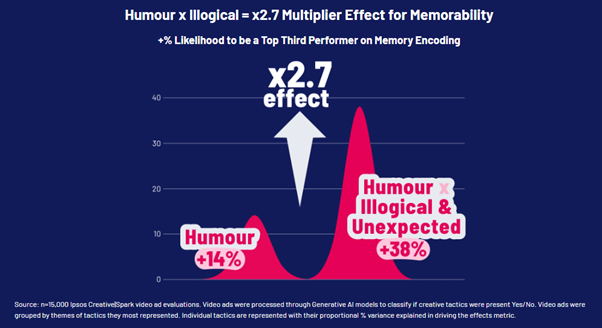
Earning attention is only part of the job, however. Brand messages must also be encoded in memory to pay off at the moment of choice. Humour reliably improves memorability, but our analysis shows that humour which leans into the illogical and unexpected significantly boosts the effect.
Specific tactics like twist endings, illogical moments and misdirection play a powerful role because they don't just talk at a passive audience, they draw people in as active players.
As a result, ads using such tactics are 2.7 times more effective at being encoded in memory. They invite people to figure things out, making them active participants in the story. It’s simple. Break their expectations and you can increase your chance to be encoded in their memories.
What we’ve found is clear evidence for the power of storytelling to deliver creative effectiveness and a vindication for the marketers that have pursued this craft with their agency partners. It would have been easy to fall for the seduction of a possibly lower budget and faster timeline approach to deliver a more direct brand-feature-led sales pitch. But it wouldn’t have been so effective.
Our report on Misfits Stories delves into these datasets further and identifies more specific tactics that underpin these thematic groupings of stories and the illogical and unexpected.
There is no recipe or formula for success but we do want to inspire marketers and creatives to tell the types of stories that will boost effectiveness. The evidence suggests that the brands that do this will be more effective than if we simply try and sell to audiences that don’t want to be overtly sold to.
To read the full analysis click this link and start your storytelling journey to creative effectiveness.
WFA is partnering with Ipsos in 2026 to help marketers drive creative effectiveness with HiAI powered insights