Get analysis, insight & opinions from the world's top marketers.
Sign up to our newsletter.
Humanity and cultural respect are two core elements in the development of strong, sustainable brands says Tobias Collée, Global Vice President NIVEA.
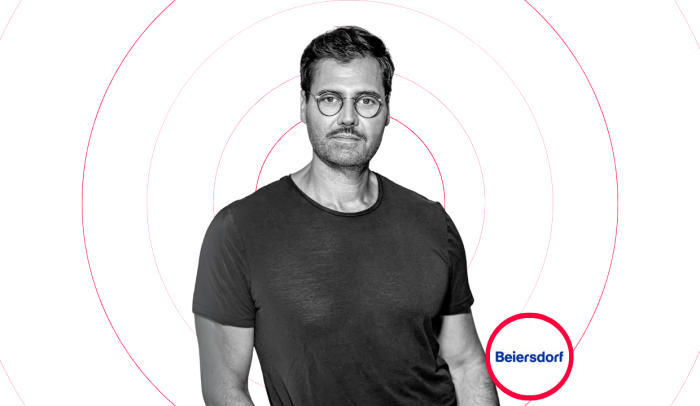
While the world of marketing is obsessed with the power of AI, NIVEA’s Tobias Collée believes that it will herald a big return for brands that can defy the sea of sameness created by everyone using the same tools.
“It's just like if I want to drive fast and I buy myself a Porsche. But if everybody has a Porsche, I won't be the fastest anymore,” he says.
Long-term brand success, he argues, relies on trust and the power of human connection. “In this world where you have all kinds of fake stuff going on and you don't really know what's true or what's not true anymore, trust is the most important thing you need to build,” he says. “Trust, humanity and emotional differentiation are what turns technology into a real lasting growth factor.”
He would like to see marketers re-balance their focus from only short-term performance metrics towards stories that build this kind of long-term emotional value. “If you only adapt [to technology] but you don't have the humanity and forget about the humans, you will not be successful, but if you only look at the emotions and you ignore the technology you won't be successful either. These two things need to come together for me,” he says.
His belief in the power of humanity and genuine human connection has been a constant throughout his career. “Living abroad shaped how I approach my role today. For marketers, experiencing different cultures is incredibly important you don’t just learn about others, you also learn a lot about yourself and your own openness,” he says.
And openness and curiosity are an essential trait for anyone in marketing to truly succeed, according to Collée.
A big part of his current brief has been to diversify the brand with the aim that every human can find themselves in the brand NIVEA. “In the past, our advertising often focused on a too narrow representation, for example, fair-skinned families in beach settings with our sun care products, which did not reflect the diversity of our global consumer base.”
What matters most for Collée is bringing the entire organisation along on the journey and aligning on how the new approach comes to life in everyday work. “You set a clear ambition for where you want to go, and then it’s about continuous dialogue, refining processes and learning along the way, sometimes two steps forward, one step back. But that’s part of real transformation, and today I can truly see the progress,” he says, “change only works as a team effort, so it’s about creating clarity, building momentum and moving forward together.”
“As the world’s largest skincare brand, we must be there for everyone, every skin type, every skin tone, every age, gender, culture or beliefs, and make sure all are represented in our communication,” he shared, “every skin that is healthy is beautiful skin and that is what drives us. Or in other words, beautiful skin isn’t necessarily healthy but healthy skin is always beautiful skin.”
Tobias started in marketing working for a brewer, when one day someone asked him to revitalise a struggling brand, Astra; there was no new money, and the bottle and the crate had to stay the same but he could change the logo and the message.
His solution was not to pretend that beer was something it was not, but to focus on the people who actually drank it and their human story. “I decided to celebrate the working class who actually drink the beer and show their real environment in a very authentic way and this was at a time where everything was premium, everything had gold edges and polish,” he says.
His success – the same campaign still runs today – took him to Unilever and Axe/Lynx in Europe, where he acquired a more formal marketing education.
The next stop was China where his attempts to launch deodorant for 2.6 billion Chinese armpits stumbled for more than a year until he realised that unlike at Astra, he had not understood the target audience properly and considered their culture. “There was a tipping point where I realised that I had not considered the culture enough. If you are sweating in China it is ok but having body odour, it is an inner problem. It's not something we can solve from the outside, according to Chinese traditional medicine,” he says.
He reversed the process of translating concepts from English to Chinese and started working with the agency to develop them in Chinese before back translating into English. “Coming with the back translation to my English boss, he looked at me as if I'm completely nuts,” he says. “I think this is a good learning about culture and better understanding the differences in the world and respecting them.”
Although he eventually found the human connection that cracked the challenge, the experience was humbling. “If you come into a country with a clear mandate and you're not able to fix it or manage and move it forward within a year you start questioning yourself – whether you really learned marketing the right way and truly master it,’ he says
Now at NIVEA and based in Hamburg, he says he is humbled to have the privilege to shape not just a brand but a true brand icon and make it future ready for the next 100 years before handing it over to the next generation.
“For me, the big learning is that marketing is about people and collaboration and not about solo heroics, which we often celebrate in the marketing industry. There is an African proverb that says if you want to go fast, go alone. If you want to go far, go together and maybe that represents a bit of my time in China where I wanted to go too fast to launch,” he says.
“I do believe that the best ideas, the biggest transformations, and the boldest risks only succeed if you bring different people along and making them feel included. It's not about just the brilliance of the individual. Even though that’s very much in vogue in our world right now.”