Get analysis, insight & opinions from the world's top marketers.
Sign up to our newsletter.
What every media director should take from the Paid Media Effectiveness Handbook, and what surprised him along the way, says Tom Ashby, Global Lead, Media Services at WFA
Earlier this year we at WFA started work with Ebiquity on what would eventually become the Paid Media Effectiveness Handbook. Along the way we surveyed 71 senior marketers and effectiveness leaders and had detailed conversations with 27 practitioners from some of the world’s largest advertisers.
The result has been the most the most-downloaded report during my three years at WFA and we’ve received a lot of positive comments back from WFA Media Forum members.
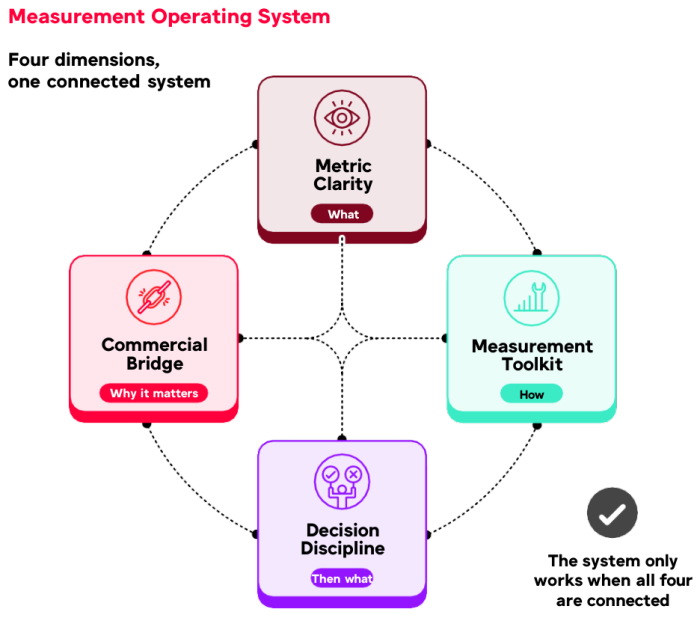
Paid media effectiveness works best when metric clarity, measurement, decision-making and commercial alignment are connected.
Now, whilst I already had plenty of views on what drives effectiveness, this project has reinforced or changed some across five key areas:
Contributing members were not short of tools, with most using some combination of methodologies already. But only 15% said effectiveness evidence was the primary driver of media budget decisions, and more than half said insights often arrive too late to influence those decisions. Talk about wasted spend!
This shifted my view of where the real challenge for effectiveness sits. Skills and capabilities matter of course, but governance, planning, ownership and organisational culture can matter more.
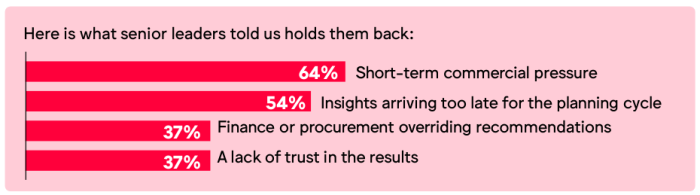
Senior leaders say the main barriers to turning effectiveness measurement into investment decisions are organisational rather than methodological.
This was not a new learning as the project started with my provocation: “how can we help members decide what to do, when they see one dashboard saying one thing, and another saying the opposite?”
This is one of my favourite conclusions from the handbook. Organisations should sometimes simply let their methods disagree and not devote resource chasing the perfect answer. Different methodologies will give different answers because they are measuring different things – sounds obvious when put that way, what matters is having the understanding of why they differ. Speaking with members since has reinforced this because the more culturally mature organisations seem more comfortable with ambiguity.
After a career working in FMCG and at consultancies, this should not come as a surprise! Of course it is far better to have a good recommendation that you can act on now, than a great recommendation that arrives the future. Fifty-four percent of respondents told us that insights were arriving too late to be included in the planning cycle.
Being able to influence the next decision in the cycle should be the goal of effectiveness measurement. To ensure these insights arrive in time, it may be necessary to limit or restrict what you ask.
Fewer than one in seven respondents said marketing and finance were fully aligned on paid media effectiveness and it has long been convenient for us to blame finance for not understanding media. Guilty as charged.
As a result of this project, I’m less sympathetic to this argument. We often talk of wanting media to be treated as an investment and therefore we need to explain it in the terms that the rest of the business uses to evaluate investment: incremental revenue, profit, payback and risk.
The business case is ultimately made by translating media metrics into net profit impact. The Handbook beautifully illustrates how we can make the case and the fact that net profit impact is tracked by fewer than one in five of our participants demonstrates how much work we have to do in marketing.
The use of the right AI models makes modelling faster, can extend the scope of models and potentially allow greater share of budgets to be modelled – all of which should improve effectiveness. However, using AI won’t solve the fundamental issues of missing definitions, poor data or unclear ownership. As one contributor put it during the research, if the naming conventions aren’t right, AI isn’t going to work them out for you.

For more information or questions, please contact Tom Ashby at t.ashby@wfanet.org