Get analysis, insight & opinions from the world's top marketers.
Sign up to our newsletter.
New WFA and Ebiquity handbook reveals the gap between measurement capability and commercial action
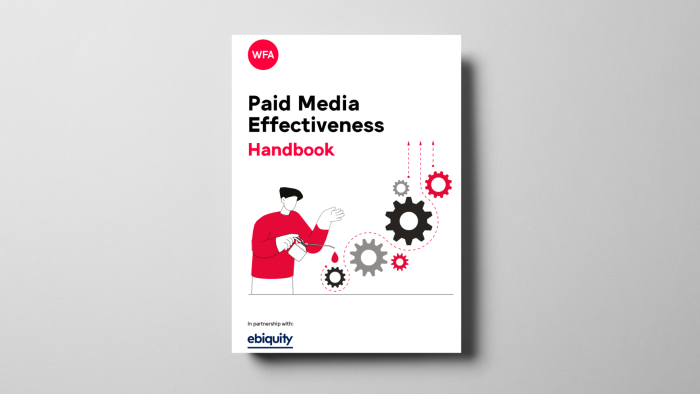
Multinational marketers have more measurement data and tools than ever before, yet the gap between what they can measure and what they act on continues to widen, according to new research from WFA and Ebiquity.
Eight in 10 advertisers already run marketing mix modelling and brand lift studies, but only 13% rate themselves strong on speed from data to insight, and less than 3% are fully confident they can separate short-term performance from long-term brand-building impact.
Despite this continued failure, three-quarters (75%) expect more than half of their budget allocation decisions to be measurement-led within three years.
Based on a survey of 71 senior leaders across 10 sectors globally and in-depth interviews with 25 leaders at major multinational advertisers, collectively responsible for $40bn in annual advertising spend, The Paid Media Effectiveness Handbook identifies three reasons for this disconnect:
The Paid Media Effectiveness Handbook is designed to give senior media and marketing leaders a better understanding of how to get the most out of their media spend, and crucially what to do when the methodologies, metrics and dashboards suggest diverging actions.
Unlike many discussions about effectiveness that focus on finding a single "best" methodology, the handbook argues that no individual measurement approach can provide all the answers. Instead, organisations need a connected system that combines multiple sources of evidence and provides clear rules for how that evidence informs decisions.
“The tools are there, the discipline is there, the coverage is there. Where marketers still struggle is to turn all those measurements into decisions that impact the business,” notes Sorin Patilinet, Global Marketing Effectiveness & Growth Strategies Innovation at PepsiCo.
“If you're not able to act upon it, what's the point? Measurement can very often be a retrospective thing. You need something in place that can help you understand what's working here now and in the near future," adds Kasper Madsen, Marketing Effectiveness Manager, Consumer Insights and Marketing Analytics at Pandora.
“The organisations that lead on effectiveness are not necessarily those with the most sophisticated tools. They are the ones that have built the operating systems, governance and commercial alignment needed to ensure measurement consistently reaches the decisions that matter,” says Tom Ashby, Global Lead, Media Services at WFA. “As scrutiny of marketing investment intensifies and new channels continue to emerge, the ability to turn evidence into action may become one of the defining competitive advantages for modern marketing organisations.”
“Paid media advertising is a $1.15 trillion industry, the size of Switzerland's entire GDP, yet too much of that investment is still allocated based on vanity metrics and weak processes. We are giving this handbook to the industry because effectiveness should not be a competitive secret. Built with brands representing over $40 billion in annual paid media spend and our partners at the WFA, it gives marketers a practical system to turn spend into genuine growth and full commercial alignment across their business," said Ruben Schreurs, Group CEO, Ebiquity.
WFA members can download the new Paid Media Effectiveness Handbook here.
A one-pager with key insights from the handbook can be accessed here.

For more information or questions, please contact Ioana Danila at i.danila@wfanet.org