Get analysis, insight & opinions from the world's top marketers.
Sign up to our newsletter.
Responsible influencer marketing can strengthen consumer trust, drive brand differentiation, and build long-term business resilience. As the creator economy continues to grow, sharing best practices becomes ever more valuable, says Alexandre Boyer, Senior Policy Manager at WFA.
The creator economy is flourishing, with companies increasing their focus on influencer partnerships. Brands are no longer centring collaborations solely on global names and viral sensations but are increasingly seeking out specialists and trendsetters within localised, niche and micro-communities.
As influencer partnerships become more diverse and community-driven, there is an evolving emphasis on professionalisation to ensure responsible practices. Creativity and responsibility need not be opposing forces.
However, it is not only businesses sharpening their focus on this channel. Regulators are also turning their spotlight on the relationships between brands, influencers and the consumer.
In Europe, a European Commission study found that 97% of influencers posted ads – yet only one in five disclosed that they were marketing (2024). Although this was a small sample and posts were selected at random, it’s often being used as the basis for new regulatory proposals.
As marketers, we know that influencer marketing is attracting huge investment from brands.
Marketing spend is expected to reach close to $100 billion in 2030. More than half of WFA members (54%) are planning to boost influencer spending and 61% consider that it will become more important in the coming years, according to our Effective Influencer Marketing Report.
And no wonder, influencers can be a great way to build messages that can have more direct resonance than traditional marketing. Such voices are often seen as more trusted and less institutional, with a different – more human and humorous tone of voice – than traditional brand advertising.
Working with creators also offers brands the opportunity to expand their audience, but we all need to work together to ensure that creativity is balanced with authenticity and that responsibility remains central.
So how can brands balance creative freedom with appropriate safeguards?
Regulators have growing concerns about the potential for misleading consumers. In Europe, new rules are likely to be proposed in the new Digital Fairness Act and Audiovisual Services Directive, both of which are due by the end of the year.
At WFA we believe that self-regulation, whereby responsible advertisers are held to robust codes they help develop, can provide effective consumer protection, more quickly and without the unintended consequences that often come with legislation.
For sectors where products are highly regulated – whether that’s food, alcoholic beverage, pharma, or beauty – there is a value chain dependent on bringing partners together to scale and ensure responsibility.
It was in this spirit that the International Alliance for Responsible Drinking (IARD) Global Standards Coalition was launched. It now brings together more than 100 leading retailers, e-commerce platforms, media agencies, sports organisations, travel and hospitality actors, digital platforms and alcohol producers to work on a shared goal of reducing harmful drinking.
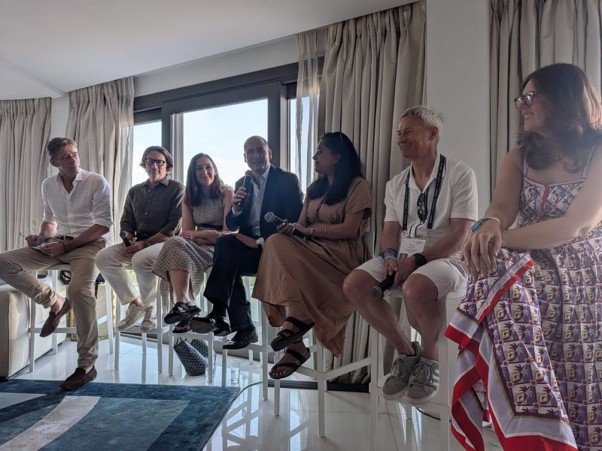
The role of creators, brands and agencies as responsible leaders was the subject of an event co-organised by WFA and IARD earlier this year at the Cannes Lions Festival of Creativity, and hosted by Deloitte Digital.
'From #Ad to Impact: Embracing Responsibility, Empowering Creativity, Expanding Influence' looked at key areas for action and highlighted collaborations where creators and brands have genuinely engaged with this agenda.
Alcoholic beverages have been at the forefront of these discussions, with IARD members launching the first-ever global standards for responsible influencer marketing of alcoholic beverages in 2021.
The panel discussion included Brad Feinberg, Molson Coors VP Media and Marketing Operations, Sarah Sorrenson, Diageo Global Media Director, Andrea Malfatti, Ferrero Global Director Public Policy and Corporate Affairs, Global Head of Food Policy, Upasana Roy, Reckitt Global Creative & Marketing Capabilities Director, Nick Purdon, Partner at Deloitte Digital, and Hannah Taylor, Deputy Managing Partner Frankfurt Kurnit Klein & Selz. Attended by representatives from all sides of the value chain, it generated several key insights:
Leading global marketing and advertising agencies are signed up to IARD’s Influencer Pledge. This is a joint commitment from IARD members and agencies on the standards they will adhere to when marketing alcohol, with a focus on transparency, abiding by local laws, and promoting understanding of responsible drinking in the content they produce.
As Julian Braithwaite, President and CEO of IARD, explains: “The business case is clear. Embedding responsibility standards builds stronger, more resilient brands in an age where trust is increasingly important to both consumers and business performance.”
When it comes to influencer marketing, choosing the right creator based on your target audience is crucial. At the event, Nick Purdon, Partner at Deloitte Digital, highlighted this: “The challenge isn’t creating more content, it’s identifying the right creators and the right conversations.” Data-driven insights are strengthening creator selection and collaboration. Deloitte's Creator Value Indicator, built with Meltwater, is one example: it combines first-party data, social signals, search intelligence and AI to inform partnership decisions beyond follower-count metrics.
With regulators watching this space closely, we want others to join us in our efforts to continue demonstrating that effective self-regulation has a positive impact. The risk is that we end up with a proliferation of conflicting national rules and a complex global regulatory landscape where creativity is constrained and compliance is convoluted.

For more information or questions, please contact Alexandre Boyer at a.boyer@wfanet.org