Get analysis, insight & opinions from the world's top marketers.
Sign up to our newsletter.
Three of this year’s Cannes Lions jurors look at key trends across Creative Effectiveness, Glass Lion: The Lion For Change and Creative Commerce to identify how creativity is ultimately about understanding people.
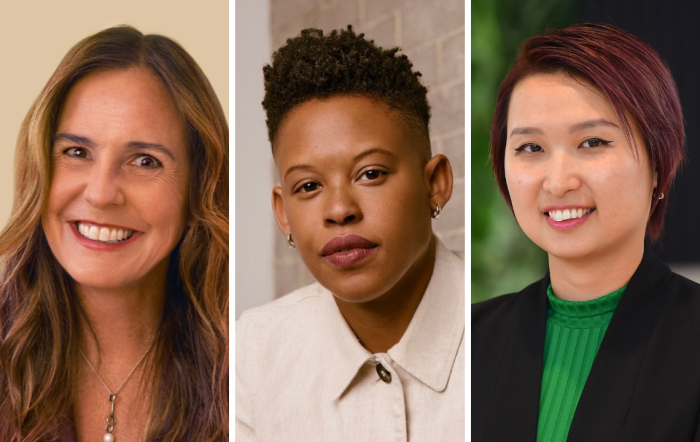
Serving on the jury this year was a privilege: not only because of the work we reviewed, but because of the opportunity to learn alongside an exceptional group of global leaders.
Across hundreds of entries, what stood out was that the strongest work wasn't the loudest or the biggest. The most effective ideas were rooted in a deep understanding of people and brought that insight to life in ways that changed behaviour, shifted perceptions, and delivered measurable business results. In many cases, that impact extended far beyond communications into products, experiences, partnerships, and culture.
The judging process also reinforced the importance of diverse perspectives. Context matters. Culture matters. The strongest ideas cannot be judged through a single lens.
And while AI shaped many conversations throughout the week, one thing became even clearer: technology will continue to transform how we create, but humanity will always be what makes creativity meaningful.
Serving on the Glass Lions jury was a powerful reminder that the best creativity doesn’t just win attention; it creates meaningful change for people and communities.
While every shortlisted campaign demonstrated incredible craft, the work that stayed with me wasn’t just creatively brilliant. It was intentional, authentic and built with a clear understanding of the people it was designed to serve.
Two themes stood out:
1. Intentional creativity: The strongest campaigns proved that every creative decision matters. From casting and storytelling to cultural references and design, nothing felt accidental. There was a real sense of “if you know, you know.” Some of the most impactful choices may have looked subtle to those outside the community, but to the people they were made for, they signalled understanding, trust and belonging. That’s what separated great creative from work that truly created impact.
2. Purpose through brand superpowers: The brands that stood out knew exactly why they belonged in the conversation. They weren’t asking, “How can we be part of this?” They were asking, “What can only we contribute?” The strongest work understood that purpose and business are not competing priorities. When a brand brings its unique strengths to solve a real problem, everyone benefits. Communities receive meaningful value, brands build deeper credibility, and business outcomes become stronger because the impact is authentic, not performative.
Creative Commerce is one of the newest Lions categories and the winners this year reaffirmed a simple but powerful principle: innovation is most impactful when it is human-centred. The future of commerce will not be defined by technology alone, but by how creatively brands use it to deliver meaningful value for people.
Across the winning work, three clear trends emerged:
1. Creative-led commerce: Redefining the exchange of value
The most compelling work challenged conventional ideas of commerce by reimagining how brands and consumers engage. Rather than treating transactions as the end goal, these campaigns transformed them into creative experiences. Whether by converting digital in-game currency into real-world value, enabling payment with influence, or putting a price tag on luck, the strongest ideas demonstrated that commerce itself can become a powerful creative medium.
2. Expanding receptivity: Finding new paths to purchase
As consumers become increasingly resistant to traditional marketing, the best work uncovered unexpected moments of receptivity. Brands found entirely new touchpoints, from HR communications and school supply lists to unexpected retail shelves. These ideas did more than optimize the customer journey; they reinvented it.
3. Human insight and authenticity: The enduring competitive advantage
Perhaps the most striking observation from this year's judging was how little the conversation centred on technology itself. While AI and emerging technologies enabled impressive execution, they were rarely the reason a campaign succeeded.
In an era where consumers are increasingly sceptical of what is real, brands that consistently demonstrate genuine values, through their products, communications, customer experiences and technology investment will earn the trust that ultimately drives commerce.
Read more perspectives from the jury room in the companion article here, featuring Marcel Marcondes (AB InBev) on Creative Brand, Tanja Grubner (Essity) on Direct, Anupriya Acharya (Publicis Groupe South Asia) on Creative Data, and Kazuhiro Shimura (Dentsu) on Innovation.