Get analysis, insight & opinions from the world's top marketers.
Sign up to our newsletter.
With new AI tools entering the market at pace, how can brands effectively assess the technology, identify potential risks and ensure appropriate safeguards are in place? WFA, in partnership with Responsible AI Consultancy Bonsai, has launched a practical seven-step guide to help brands do just that
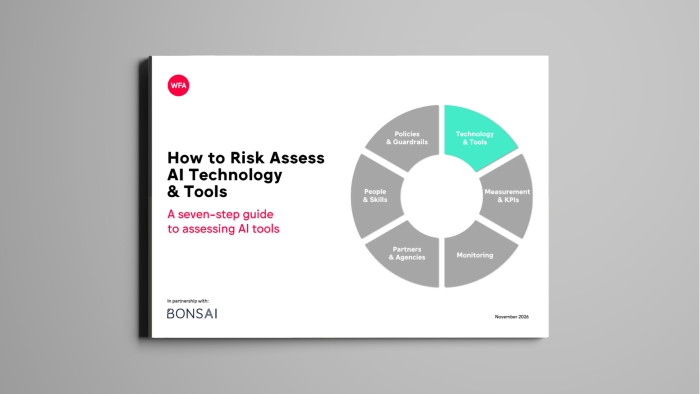
With new AI tools entering the market at pace, how can brands effectively assess the technology, identify potential risks and ensure appropriate safeguards are in place? WFA, in partnership with Responsible AI Consultancy Bonsai, has launched a practical seven-step guide to help brands do just that.
AI is rapidly expanding the range of tools available to marketers. But assessing these tools is not always straightforward. A single platform may involve multiple AI models, third-party providers, data flows and integrations, creating risks that are not always immediately visible.
WFA's latest research finds that 75% of brands have human oversight requirements for AI outputs and 70% have a clear list of approved or prohibited tools. Yet only half have a clear governance process for adopting new tools.
The new AI Tooling Risk Assessment Framework provides a practical seven-step approach to AI technology due diligence, helping brands understand the technology behind a tool, map its suppliers and data flows, gather evidence, assess potential risks and identify the technical, operational and contractual safeguards needed to mitigate them.
The aim is to help brands conduct more consistent and effective assessments of AI tools, manage risks across the technology and supply chain, avoid bottlenecks and support responsible AI adoption.
To help brands navigate this complexity, WFA has developed How to Risk Assess AI Technology & Tools, in partnership with Bonsai.
The guide provides a practical, proportionate framework for assessing AI tools, setting out seven steps:
The guide also includes a fictional case study illustrating how the framework can be applied in practice, alongside an accompanying Tooling Risk Assessment Questionnaire & Framework to support supplier due diligence.
The guide builds on WFA's AI Acceleration Playbook, designed to help brands overcome barriers to AI adoption by laying the necessary groundwork and governance. It complements WFA's wider work to help brands establish effective, efficient and responsible approaches to AI adoption.
Through its AI Community, which brings together more than 1,000 professionals from WFA's global brand membership, WFA will continue to support marketers in navigating the opportunities and challenges of AI.

For more information or questions, please contact Gabrielle Robitaille at g.robitaille@wfanet.org