Get analysis, insight & opinions from the world's top marketers.
Sign up to our newsletter.
The WFA team presents its annual look at what will be important for marketers and brands in the next 12 months.
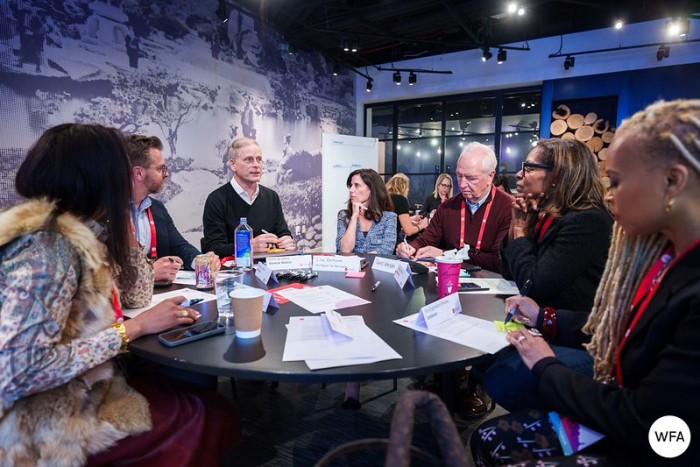
The WFA team spends a great deal of time talking to everyone, leveraging our global network of marketers and events. These conversations span from CMOs to policy leaders, from insight specialists to sourcing experts and from regulators to pressure groups every year.
Taking all these conversations into account, this is what we reckon will be the biggest trends for the year ahead:
In 2025, almost every WFA member reported using Generative AI in marketing, with 70% prioritizing it to drive efficiencies, such as automation, rather than effectiveness. In 2026, the focus for many will evolve from cost-saving to delivering measurable improvements in marketing outcomes, with brands increasingly experimenting with Gen AI to power growth and not just back-end efficiencies.
Almost all attendees at Forum Connect in Singapore, Amsterdam and New York told us they were mid-transformation, in part driven by emerging technologies like AI. This level of transformation and re-organisations is unparalleled. In 2026, marketing organisations will redefine their operating models proactively. This will involve cross-functional AI upskilling, agile working, and possibly new roles as the marketing function evolves to harness, rather than react to, accelerating technological change.
As AI and digital transformation reshape marketing, organisations are already shifting recruitment and training priorities toward adaptability, systems thinking and hands-on AI experimentation. In 2026, there will be an increased focus on 'AI coaches' and mentorship models within marketing functions. Agile, ongoing, capability development will be essential, though this should not be to the detriment of marketing fundamentals which remain as important as ever.
WFA research shows that more than half of brands expect to invest more in influencer marketing in the coming years. But that growth is about to meet a far tougher regulatory landscape. China became the first major market to require influencers to hold verified professional credentials before discussing complex topics such as finance, law, medicine or education and the EU is expected to introduce more comprehensive rules, pushing influencer marketing firmly into the regulatory mainstream. To stay ahead, marketers will need strong, global standards.
Regulators across the world are now starting to hard-wire AI transparency into law: the EU, China and five US states already have measures in place or due to come into force requiring disclosures for AI-generated and enhanced content and AI-assisted services. 2026 will be the year that brands define what responsible AI disclosures look like in practice, not just to ensure compliance, but to protect brand equity among rising AI skepticism. Marketers will need clear internal standards on when and how to label AI content and how to explain AI-assisted decisions.
The shift is clear: none of us is as good as all of us and in 2026, brands will put more work into balancing internal and external talent, people and technology, and playing to each other’s strengths. AI will bring even greater potential to work faster and smarter. The opportunity will lie in understanding where the ‘augmented’ partnership between human creativity and machine intelligence genuinely gives organisations an edge. And that means moving beyond pilots and building fluid, integrated, end-to-end ecosystems where collaboration consistently beats ownership.
Marketing’s core value lies in understanding customers better than anyone else – and using creativity to turn that understanding into meaningful action that drives brand and business growth. In 2026, more leaders will recognise that short- and long-term goals can’t sit in separate buckets; they have to work hand in hand to deliver real outcomes. The CMO’s role will be to infuse creativity across the organisation – from product design to team structures and problem-solving – delivering the short-term CEOs watch while championing the long-term, building. It’s today and tomorrow all at once.
Retail Media has thrived in recent years, as advertisers leverage high-quality environments to convert high-intent consumers using retailers' first-party data. However, it is about to get a whole lot more complex and be rebranded as Commerce Media. In 2026 there will be a clear split between the retailers who want to become high-volume open exchanges prioritising inventory monetisation over targeting quality and those who want to retain curated marketplaces with strict standards. The former will invite non-endemic advertisers to place bids and disrupt the strategies of established retail media buyers. Managing this divergence will require advertisers to adopt ever more sophisticated strategies as they seek to identify the retail media environments that will still deliver the returns they seek.
In 2026, the focus of GenAI in insights will shift from faster to better. Impact will be measured through business growth, innovation success and time unlocked for strategic thinking. To deliver, client-side insights teams need to move beyond pilot fatigue and invest in purposeful upskilling, embedding strategic storytelling, critical thinking and hands-on AI practice. Teams that master the art of knowledge curation – surfacing and scaling what the business already knows – will transform internal expertise into a competitive edge. It’s time to operate with agility and exert influence in order to redefine the role of insights as a key driver of growth.
Food and alcohol advertisers are set for continued – and potentially accelerated – regulatory scrutiny in 2026. As WHO and others refine the definition of ultra-processed foods (UPFs), policymakers will be encouraged to pursue targeted and, in some markets, sweeping marketing restrictions tied to those criteria. At the same time, the EU’s review of the Audiovisual Media Services Directive – part of the legislation that defines key requirements for ads to be shown in the EU – will be pivotal, signalling whether regulators still back self-regulation or prefer statutory control. Advertisers must show credible, independently verified reductions in exposure of vulnerable groups to inappropriate content, or risk far broader prohibitions.
Do you know a CMO who would agree or disagree with these trends? Nominate them to be on a future episode of WFA's Better Marketing Podcast.