Get analysis, insight & opinions from the world's top marketers.
Sign up to our newsletter.
WFA has launched a new guide to inclusive insights, providing consumer insights leaders with a practical framework to embed inclusion into consumer research, data interpretation and strategic decision-making.
As brands navigate increasingly diverse and complex markets, the quality of consumer understanding has become a critical driver of effectiveness and growth. An inclusive approach to consumer insights sets out how inclusive research design, representative data collection and culturally informed analysis can reduce blind spots, improve strategic accuracy and strengthen brand relevance. It positions inclusive insights not as a standalone initiative, but as a foundational component of modern marketing capability.
“Inclusive insights are foundational for better marketing. Nuanced and intersectional identities are not new. However, consumers now have higher expectations of brands understanding them. Deeper understanding of identities and culture can only be achieved by designing inclusive insights learning plans up front,” said Susan Akkad Senior VP, Local and Cultural Platforms, Corporate Innovation at The Estée Lauder Companies.
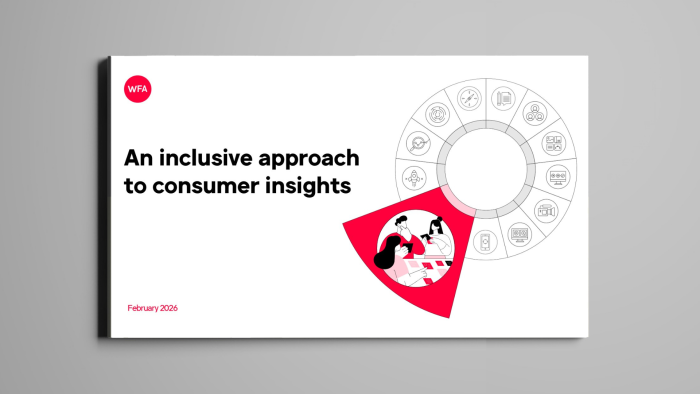
Developed in collaboration with global brand leaders part of WFA’s Inclusive Marketing Community and Insight Forum as well as external experts, the guide outlines a structured approach that spans the entire research lifecycle — from audience definition and sampling to interpretation and measurement. It encourages brands to move beyond default demographic assumptions and embrace intersectional perspectives that reflect real-world lived experiences.
“I firmly believe that everyone has the opportunity to feel seen and heard by the brands they love and engage with. As a person who can facilitate this connection, I can't stand by and not make the most of the chance to ‘walk the walk'. Ultimately, everybody wins in this scenario,” said Ashley Anzie, Director, Marketing Insights Excellence, Global Insights at The LEGO Group
The guide also highlights the growing importance of inclusive data in an increasingly AI-enabled marketing ecosystem. As organisations rely more heavily on data-driven decision-making, ensuring that research inputs are representative and empathetically designed is essential to avoiding biased outputs and missed opportunities.
“Brands above all need to have empathy and ask how can they help. With this lens, brands will not only be inclusive but stay relevant and drive growth. Applying this into the insights process, asking the right questions, including the right consumers that are representative of society and listening deeply to understand is key,” said Elaine Tam, Head of Planning & Insights, APAC Innovation at Diageo
Lastly, the new playbook also makes the business case for inclusion via recent findings from the Unstereotype Alliance, Creative Equals and Kantar, showing how inclusivity can help drive better results. In 2024, for example, 60% of Cannes Lions Grand Prix Winners had inclusion as a core element of their campaigns.
The guide is designed for heads of consumer insights, inclusive marketing leads and strategy professionals seeking to embed inclusion into company-wide research and planning processes. It provides practical guidance to benchmark current practices, identify capability gaps and build more representative, future-ready insight functions.
WFA members can download the new Guide to Inclusive Insights from the WFA Knowledge Hub.
Recent related content available for WFA members includes a webinar featuring The LEGO Group's Ashley Anzie, Director, Marketing Insights Excellence, Global Insights, and Will Oshiro de Groot, Senior Insights Manager, Play Inclusion, Global Insights: Inclusive Insights For Growth: moving closer to all consumers is available for replay here.